Introduction:
Dropshipping has been called everything from a “gold rush” to a “dead business model.” The truth lies somewhere in between. While the hype of 2016–2018 made it seem like anyone could throw up a Shopify store and get rich overnight, today’s dropshipping landscape is more competitive and sophisticated. Success requires strategy, branding, and persistence.
Imagine this: you’re sitting in Rangamati City, Bangladesh, with just a laptop and $500. Within months, you could be selling eco‑friendly kitchen tools to customers in New York, London, or Sydney — without ever touching the products yourself. That’s the power of dropshipping.
This guide will take you through every stage of the journey — startup, launch, growth, and long‑term branding — with real examples, financial breakdowns, and future trends.
1. Understanding Dropshipping
What Is Dropshipping?
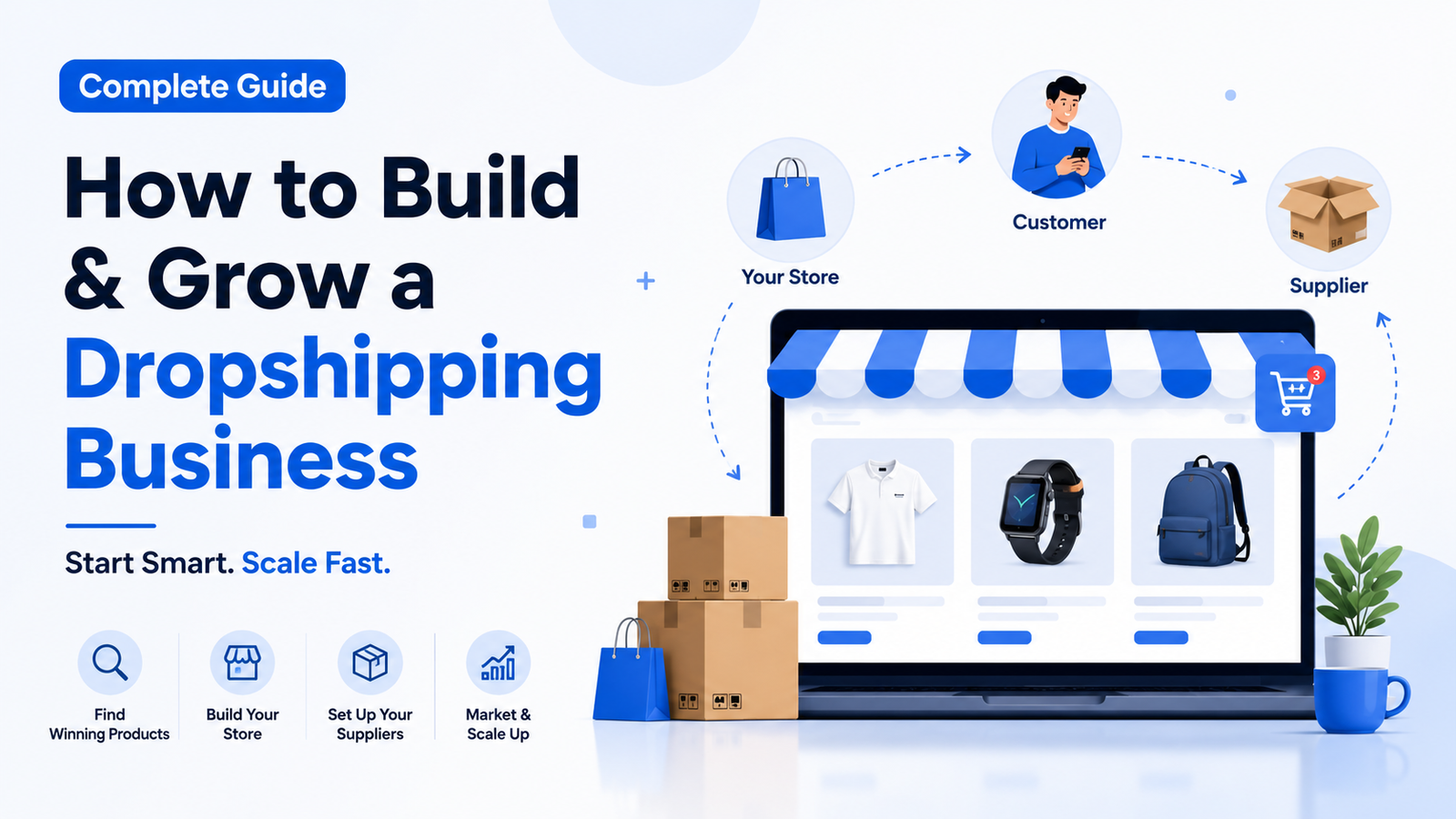
Dropshipping is a retail fulfillment method where you don’t keep products in stock. Instead:
- You list items on your online store.
- When a customer places an order, you forward it to a supplier.
- The supplier ships the product directly to the customer.
Think of yourself as the middleman with marketing skills. Your job is to find products, present them attractively, and drive traffic. The supplier handles the logistics.
Benefits
- Low startup cost: No warehouse, no bulk inventory.
- Flexibility: Run your business from anywhere.
- Scalability: Add new products quickly.
Challenges
- Lower profit margins.
- Reliance on supplier reliability.
- High competition in trending niches.
1.1 Start Dropshipping with “Zero Investment” — The Misleading Truth
Many people online claim you can start dropshipping with zero investment. While it sounds exciting, the reality is more nuanced. Let’s break it down.
💡 Why People Say “Zero Investment”
- Free platforms & trials: AliExpress with Shopify’s free trial or WooCommerce (free plugin) make it look like you can launch without upfront costs.
- No inventory risk: You don’t need to buy products in advance — suppliers ship only after you get an order.
- Free tools for marketing: Social media, Canva, and Mailchimp’s free tier let you promote your store without paying at first.
- eBay dropshipping: On eBay, you can list items without buying stock upfront. Customers pay first, then you order from the supplier. Plus, eBay gives new sellers a limited number of free listings each month.
👉 This is why beginners often believe dropshipping requires no money.
⚠️ The Hidden Truth
Even if you skip inventory, there are minimum unavoidable costs to run a real business:
- Domain name: ~$10–$15 per year (if you build your own store)
- Hosting or Shopify plan: $20–$39 per month after trial
- Marketing: Ads or content creation — even $5/day adds up quickly
- Branding basics: Logo, visuals, and sometimes packaging if you scale
- eBay fees: Final value fees (10–15% of sale price) and payment processing fees apply once you start selling
- Cash flow reality: Even on eBay, you must pay the supplier after each order. If platforms hold your funds (common for new sellers), you’ll need a reserve of money to cover supplier payments until payouts are released.
👉 This means dropshipping cannot truly work without investment. You may avoid inventory costs, but you still need funds for fees, marketing, and supplier payments.
💰 Why You Need at Least $500
To avoid problems like platforms holding your money longer or being unable to pay suppliers on time, you should plan to start with a minimum reserve of $500. Here’s why:
- Supplier payments: Orders must be paid immediately, even if your payout is delayed.
- Platform holds: eBay, PayPal, and Shopify often hold funds for new sellers for 7–21 days. Without reserve cash, you can’t fulfill orders.
- Marketing buffer: Running ads or boosting listings requires daily spend — without reserve money, your store won’t get traffic.
- Emergency cushion: Refunds, returns, or disputes can eat into your balance. A reserve protects you from sudden losses.
👉 With at least $500 in hand, you can keep your business running smoothly, cover supplier costs, and avoid cash flow stress while waiting for payouts.
✅ The Practical Takeaway
- You can test dropshipping with near‑zero investment using free trials, organic marketing, or eBay’s free listings. But you must need a small capital reserve in hand like $500
- But to grow beyond a test store, you’ll need a small budget — ideally more than $500 — for essentials like domains, ads, fees, and cash flow management.
- Think of “zero investment” dropshipping as a trial run, not a long‑term business strategy.
2. Types of Dropshipping Best Fit for Small Investment
Starting a dropshipping business doesn’t have to require large capital. With the right model, you can begin with minimal investment, test the market, and grow steadily. Below are the dropshipping types that work best when funds are limited.
| Dropshipping Type | Description | Example | Best For |
| Blind Dropshipping | Supplier ships in plain packaging with no branding, invoices, or promotional inserts — keeping supplier identity hidden. | Generic kitchen tools shipped without logos. | Beginners protecting supplier details |
| Product Reselling (Classic) | List supplier products in your store, supplier ships directly to customers. | Selling phone cases from AliExpress. | Beginners |
| Print‑on‑Demand (POD) | Supplier prints custom designs on t‑shirts, mugs, posters after orders are placed. | Anime‑themed hoodie store. | Creative entrepreneurs |
| Private Label / White Label | Supplier produces items with your branding and packaging, allowing higher pricing. | Branded skincare line. | Long‑term brand building |
| Service‑Based Dropshipping | Resell digital services like designs, courses, or software licenses. | Selling logo design packages or online courses. | Digital‑focused businesses with low overhead |
2.1 Dropshipping Planning: Quick Wins vs. Lasting Brands
Short‑Term Dropshipping (No Branding)
Goal: Quick cash flow, minimal setup, test products fast.
Timeline: 3–6 months.
Investment: Small (~$500–$700).
- Store Setup: Basic Shopify/WooCommerce store, free or cheap theme.
- Products: Trendy, impulse‑buy items (gadgets, seasonal tools, cheap accessories).
- Marketing: Paid ads (Facebook, TikTok) + organic social posts.
- Supplier Relationship: One or two suppliers, fast verification only.
- Branding: None — generic packaging, no logo, no storytelling.
- Outcome:
- Quick wins if products trend.
- Higher churn when trends fade.
- Best for learning the ropes and testing niches.
- Long‑Term Dropshipping (Branding)
Goal: Build a sustainable business with loyal customers.
Timeline: 1–3 years.
Investment: Larger (~$1000+ reinvested profits).
- Store Setup: Professional design, premium theme, custom domain.
- Products: Niche‑focused (eco‑friendly, fitness gear, skincare).
- Marketing: Mix of ads, SEO, influencer collaborations, email flows.
- Supplier Relationship: Multiple suppliers, diversified for stability.
- Branding: Strong identity — logo, packaging, storytelling, customer loyalty programs.
- Outcome:
- Repeat customers, higher lifetime value.
- Ability to scale into private label or wholesale.
- Long‑term growth and authority in your niche.
| Aspect | Short‑Term (No Branding) | Long‑Term (Branding) |
| Timeline | 3–6 months | 1–3 years |
| Investment | ~$500–$700 | ~$1000+ |
| Products | Trendy, low‑cost items | Niche, higher‑value |
| Marketing | Paid ads only | Ads + SEO + influencers |
| Branding | None | Strong identity & trust |
| Outcome | Fast cash, trend‑based | Sustainable growth, loyal base |
3. Setting Up Your Dropshipping Business
Step 1: Market & Product Research
Research is the backbone of dropshipping.
- Use Google Trends to spot rising China, Vietnam or Korean products.
- Check AliExpress Dropshipping Center for hot sellers.
- Study eBay sold listings to see what’s moving.
Example: A beginner notices that reusable water bottles are trending. Instead of generic bottles, they niche down to collapsible travel bottles — less competition, higher appeal.
Why Dropshipping with China, Vietnam, and South Korea goods?
Dropshipping with goods from China, Vietnam, and South Korea is more profitable than using products from the US or EU due to lower product costs, faster trend response, and a wider variety of products. Asian suppliers offer products at much lower prices, allowing for higher profit margins. For example:
| Item | Asian Supplier | US/EU Supplier |
| Product cost | $8 | $18 |
| Shipping/handling | $4 | $6 |
| Total cost | $12 | $24 |
| Selling price | $35 | $35 |
| Possible gross profit | $23 | $11 |
As shown, with Asian suppliers, you have more room for profit (a $23 profit vs. $11) to cover expenses like ads, marketing, and potential returns and expenses while still earning a higher profit. China excels in a variety of goods, Vietnam is strong for Clothing and fashion items specially Shoes and bags, and South Korea has a premium appeal in beauty and lifestyle items like K-beauty, skincare, cosmetics .
In contrast, US/EU products often have higher production, labor, and shipping costs, making it harder to generate significant profits.
Step 2: Choosing a Platform
- Shopify: Easy to use, app ecosystem.
- WooCommerce: Flexible, cheaper long‑term.
- BigCommerce: Scalable for larger stores.
- eBay: E-commerce Large Marketplace
Most beginners start with Shopify because of its simplicity.
Step 3: Legal Setup
- Register your business (LLC or sole proprietorship).
- Open a business bank account.
- Understand tax obligations.
Step 4: Store Setup
- Choose a clean theme.
- Write SEO‑friendly titles: “Collapsible Travel Water Bottle – Eco Friendly & Portable.”
- Add high‑quality images (avoid supplier stock photos).
4. Launch Phase: Getting Your First Sales
Product Optimization
- Highlight benefits: “Save space in your backpack.”
- Use urgency triggers: “Only 12 left in stock.”
- Offer bundle deals: “Buy 2, get 1 free.”
Marketing Channels
- Facebook Ads: Quick testing.
- TikTok Organic Content: Viral potential.
- Instagram Influencers: Micro‑influencers drive niche traffic.
- Google Shopping Ads: Evergreen products.
Story Example: A seller spends $200 on TikTok ads for a bamboo cutlery set. One video goes viral, generating 500 orders in a week.
Customer Service
- Respond within 24 hours.
- Use chatbots for FAQs.
- Offer clear refund policies.
5. Scaling Your Dropshipping Store
Analytics & Optimization
- Track KPIs: conversion rate, cost per acquisition, average order value.
- Use Google Analytics and Shopify reports.
- A/B test product pages.
Supplier Diversification
- Don’t rely on one supplier.
- Build relationships with multiple vendors.
- Negotiate better margins.
Automation Tools
- DSers: Automate order fulfillment.
- Zapier: Connect apps.
- Klaviyo: Email marketing automation.
Expanding Product Range
- Add complementary products.
- Introduce seasonal items.
- Test new niches with small ad budgets.
6. Long-Term Strategy: Building a Brand
Dropshipping success isn’t about quick wins.
- Transition to private label branding.
- Invest in custom packaging.
- Create a loyalty program.
- Build a community (Facebook groups, Discord).
Example: A store selling eco‑friendly kitchen tools rebrands as “GreenChef Essentials.” They add custom packaging and a blog about sustainable living. Customers begin to see them as a trusted brand, not just a random store.
7. Financial Planning
Startup Costs
- Domain & hosting: $20–$50/year.
- Shopify plan: $29/month.
- Marketing budget: $200–$500.
- Apps & tools: $50–$100/month.
Growth Costs
- Ad scaling: $1000+ monthly.
- Virtual assistants: $300–$500/month.
- Branding & packaging: $500–$2000.
8. Top 10 Mistakes That Kill Your Dropshipping Business
- Buying automation tools too early
Don’t rush into buying automation tools when you’re just starting dropshipping. As a beginner, you need hands‑on experience first — learning product research, supplier communication, order processing, and customer service manually. This way, you understand the full business flow, spot where time is wasted, build trust with suppliers, and avoid unnecessary costs. Once you’ve mastered the basics and orders become repetitive, that’s the right time to invest in automation tools to scale efficiently.
- Automation tools are powerful, but experience is priceless.
Start dropshipping manually to gain experience, control costs, and build supplier trust. Buy automation tools later, once you know exactly where they’ll save time.
- Chasing saturated products (fidget spinners)
Selling what everyone else is selling leads to heavy competition and thin margins. Focus on unique or niche products instead.
- Ignoring shipping times (customers hate waiting 30+ days)
Long delivery times frustrate buyers and cause refunds. Always check supplier shipping policies and aim for faster options.
- Poor customer service
Slow replies or unclear refund policies damage trust. Good communication and support build loyalty and repeat sales.
- Ignoring product quality (bad reviews kill trust)
Selling low‑quality items leads to complaints and negative reviews. Order samples yourself to check quality before listing.
- Not verifying goods (fake reviews, fake products, fake suppliers)
Failing to check authenticity can ruin your reputation. Always verify suppliers, read real customer reviews, and test products before selling.
- Weak product descriptions
Copy‑pasting supplier text doesn’t sell. Write clear, benefit‑focused descriptions that connect with customers.
- Neglecting branding
Generic stores feel forgettable. Even simple branding — logo, packaging, consistent tone — makes you stand out.
- Hiring the Wrong Agency or Freelancer for Your Dropshipping Business
Choosing the wrong partner wastes money and slows growth. If they don’t understand dropshipping — from cataloging and SEO to supplier checks — you’ll face poor results and frustrated customers. Pick agencies or freelancers who combine skill with honesty
9. Case Study: From $500 Startup to $50,000 Revenue
Let’s walk through a realistic journey:
- Picks niche: eco‑friendly kitchen tools.
- Launches Shopify store with 10 products.
- Runs TikTok ads ($200 budget).
- Gains traction with bamboo cutlery set.
- Scales ads to $2000/month.
- Expands into private label branding.
- Hits $50,000 revenue in 12 months.
10. EcomGoFly Is the Best Fit for Your Dropshipping Business
When it comes to building a reliable and profitable dropshipping business, EcomGoFly is the partner you can trust. With expertise in cataloging, SEO, and eBay benchmarking, they ensure your products are positioned to sell. Their transparent payment policies and global client handling make collaboration smooth and stress‑free. By verifying suppliers and focusing on trust, they protect your reputation and customer satisfaction. Through the branding persona “Babu,” EcomGoFly adds personality and recognition to your store, helping you stand out in a crowded market.
👉 EcomGoFly isn’t just a service provider — they’re the right fit to hire if you want a sustainable, growth‑focused dropshipping business.
Conclusion
Dropshipping is not a get‑rich‑quick scheme. It’s a business model that rewards persistence, smart research, and customer focus. Whether you’re starting with $1000 or scaling to six figures, the roadmap is clear: research, launch, optimize, scale, and brand.
The entrepreneurs who treat dropshipping as a real business — not a side hustle — are the ones who thrive.
If you’re serious about dropshipping success, EcomGoFly is the partner to hire.